Ruifa Modular House Ruifa Modular House

How to Reduce Construction Costs with Prefabricated Buildings?

Time:2026-05-11 Author:Mason
0%

In the construction industry, costs can spiral out of control quickly. As projects grow, budgets often become a significant concern. This is where prefabricated buildings come into play. They offer a viable solution for those wondering how to reduce construction costs with prefabricated buildings.

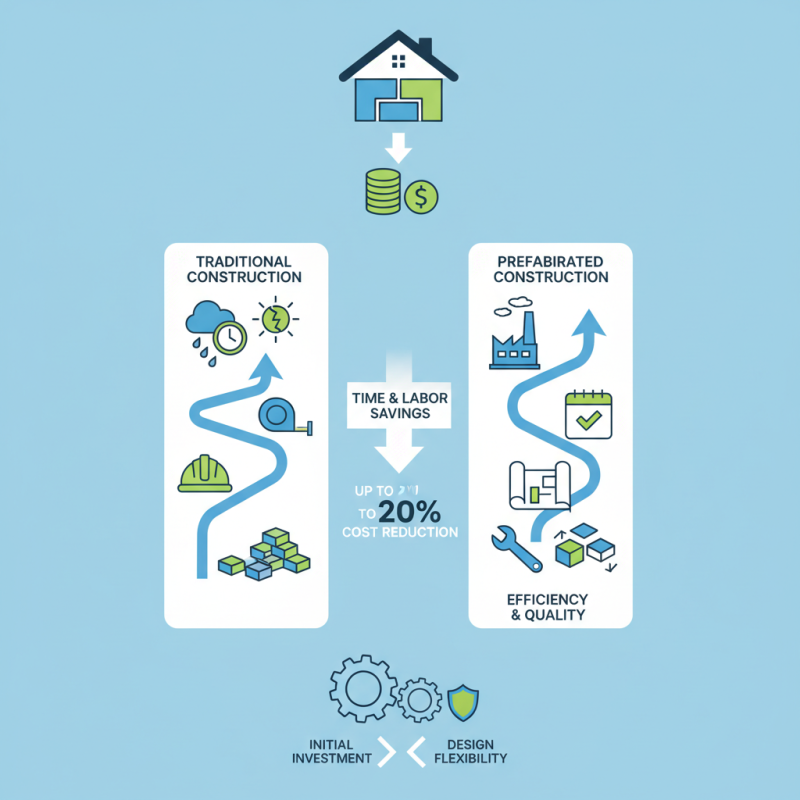
Prefabrication streamlines the building process, cutting down on both time and labor expenses. By assembling parts in a factory, delays caused by weather and site conditions are minimized. Businesses have reported savings of up to 20% through these methods. The streamlined approach leads to faster project completion, benefiting clients and contractors alike. Yet, challenges exist.

The reliance on specific designs and manufacturing may limit flexibility. Additionally, the initial investment can be daunting for some developers. Understanding these trade-offs is crucial when considering how to reduce construction costs with prefabricated buildings. A thoughtful approach can lead to substantial savings while enhancing efficiency and quality.
How to Reduce Construction Costs with Prefabricated Buildings?

Benefits of Prefabricated Buildings in Cost Reduction

Prefabricated buildings are gaining popularity for their ability to reduce construction costs significantly. One major benefit is the speed of construction. With prefabricated elements built off-site, projects can be completed in a fraction of the time. This efficiency directly translates to lower labor costs, as fewer workers are needed on-site during the building process.

Moreover, the precision of prefabrication leads to reduced material waste. Traditional construction often results in excess materials being discarded. In contrast, prefabricated methods optimize resource use, thereby lowering overall expenses. This approach also minimizes delays due to weather or site conditions, ensuring that the project stays on track.

However, relying solely on prefabrication may pose challenges. Local regulations and site specifics can sometimes hinder the adaptability of these structures. Builders must carefully consider these factors before proceeding. While the cost benefits are clear, the initial investment might not always align with every project's needs. Therefore, thorough planning is essential.

Cost Comparison: Traditional vs. Prefabricated Construction

Key Components of Prefabricated Construction Systems

Prefabricated construction systems comprise several essential components that enhance efficiency and reduce costs. One key element is modular units, which are fabricated in factories and transported to the construction site. These units can be walls, floors, or entire rooms. Their standardized nature allows for faster assembly, reducing labor costs significantly.

Another critical component is the use of engineered materials. These materials are designed to meet specific performance criteria while being lightweight and durable. This choice can lead to lower transportation costs. However, relying on engineered materials may require a shift in traditional construction practices, which can be challenging for some workers.

Additionally, the integration of technology, such as Building Information Modeling (BIM), plays a vital role. BIM assists in planning and visualizing the project, reducing errors during construction. While this technology streamlines processes, there might be a learning curve for teams unfamiliar with it. Adopting prefabricated systems can lead to substantial savings, but stakeholders must stay alert to potential training gaps and technological challenges.

Strategies for Effective Planning in Prefabrication

Effective planning is crucial in leveraging prefabricated buildings to reduce construction costs. With the construction industry facing heightened pressure to cut expenses, prefabrication presents an efficient alternative. According to a report by McKinsey, up to 30% of construction costs can be reduced through off-site manufacturing. This strategy minimizes waste and streamlines labor, which is often one of the biggest cost drivers in traditional building methods.

To effectively plan for prefabrication, stakeholders must invest time in the design phase. Early collaboration between architects, engineers, and contractors is essential. A 2018 study noted that projects with integrated teams experienced 10-15% fewer delays and a considerable reduction in change orders. These changes often represent hidden costs. Precision and attention to detail during the planning process can mitigate these issues, ultimately leading to smoother execution.

However, it’s important to approach prefabrication with a critical mindset. Miscommunication in the early stages can lead to significant setbacks. A survey conducted by the National Institute of Standards and Technology found that project overruns related to planning can climb beyond 20%. Thus, refining communication channels and reinforcing accountability within the team is vital. Proper documentation and evolving design specifications must be prioritized to ensure project alignment and cost-effectiveness.

Case Studies: Successful Cost Savings with Prefabricated Projects

Prefabricated buildings have proven to be a game-changer in the construction industry. A case study in California highlighted a commercial project that saved 30% in costs. The approach involved assembling components off-site, which significantly reduced labor expenses and construction time. This strategy allowed for more predictable budgets and timelines, benefiting all stakeholders.

In another instance, an educational facility in Texas utilized prefabrication to streamline its construction process. By employing modular methods, the project was completed six months ahead of schedule. However, challenges arose in coordinating deliveries and site preparations. These hiccups revealed the need for better communication among contractors. Despite these setbacks, the overall cost savings were substantial.

While prefabricated buildings offer many advantages, they aren’t without flaws. Some designs may not meet specific aesthetic demands. Additionally, reliance on factory methods can lead to less flexibility on-site. Recognizing these potential issues is crucial for successful implementation. Embracing prefabrication requires balancing efficiency with creative design solutions.

Challenges and Solutions in Prefabricated Building Cost Management

Prefabricated buildings offer numerous benefits, but managing costs poses challenges. One significant issue is the initial investment. While factories streamline production, the setup can be expensive. This high entry cost can deter some developers from pursuing prefabrication. It's essential for construction firms to evaluate their budgets carefully and consider long-term savings.

Another challenge lies in logistics. Transporting large prefabricated sections can incur unexpected costs. If not well-planned, delivery delays can impact project timelines. This may lead to additional labor expenses. Stakeholders must establish efficient coordination among suppliers, manufacturers, and transporters to mitigate these risks. Communication is key for avoiding costly mistakes.

Quality control is another area requiring attention. Sometimes, prefabricated components may not meet site-specific requirements. This discrepancy can lead to expensive modifications. Regular inspections during production can help address potential issues before they escalate. Emphasizing quality throughout the prefabrication process ensures that the final product aligns with the intended designs and standards.

FAQS

: What are the main benefits of prefabricated buildings?

: Prefabricated buildings reduce construction costs through faster assembly and lower labor needs.

How does prefabrication minimize material waste?

It optimizes resource use, preventing excess materials from being discarded during construction.

Can prefabricated buildings adapt to all local regulations?

No, local regulations and site specifics can hinder their adaptability. Careful consideration is needed.

What are modular units in prefabricated construction?

Modular units are built in factories and transported to sites. They include walls, floors, and entire rooms.

How does technology impact prefabricated construction?

Technology like Building Information Modeling (BIM) aids planning and reduces errors but may require training.

Are there any challenges when using engineered materials?

They may require changes in traditional practices, posing difficulty for some workers accustomed to older methods.

What was the cost-saving achieved in a California case study?

A commercial project saved 30% in costs by assembling components off-site, reducing labor expenses.

How can communication issues affect prefabricated projects?

Poor communication can hinder site preparations and deliveries, causing delays despite overall cost savings.

Do prefabricated buildings always meet aesthetic requirements?

Some designs may not satisfy specific aesthetic preferences, limiting creative options on-site.

What should stakeholders consider before adopting prefabrication?

They must weigh efficiency against design flexibility and be prepared for potential training gaps.

Conclusion

In exploring "How to reduce construction cost with prefabricated buildings," the article emphasizes the substantial benefits of utilizing prefabricated construction systems. These buildings offer reduced labor costs, quicker project timelines, and minimized material waste, which collectively contribute to significant cost savings. Key components such as modular units and standardized processes are crucial for streamlining construction, while effective planning strategies enhance efficiency and coordination throughout the project lifecycle.

The article also presents case studies that highlight successful instances of cost reductions achieved through prefabrication, demonstrating real-world applications of these strategies. However, it acknowledges challenges like logistical complexities and potential design limitations, while proposing solutions to address these issues. By fully understanding and implementing these insights, stakeholders can successfully navigate the growing trend of prefabricated buildings and realize their economic advantages in the construction industry.

Mason

Mason

Mason is a seasoned marketing professional with a deep expertise in the company's offerings and a passion for driving brand awareness. With a strong background in digital marketing strategies, he has an innate ability to connect with diverse audiences and effectively communicate product benefits.......