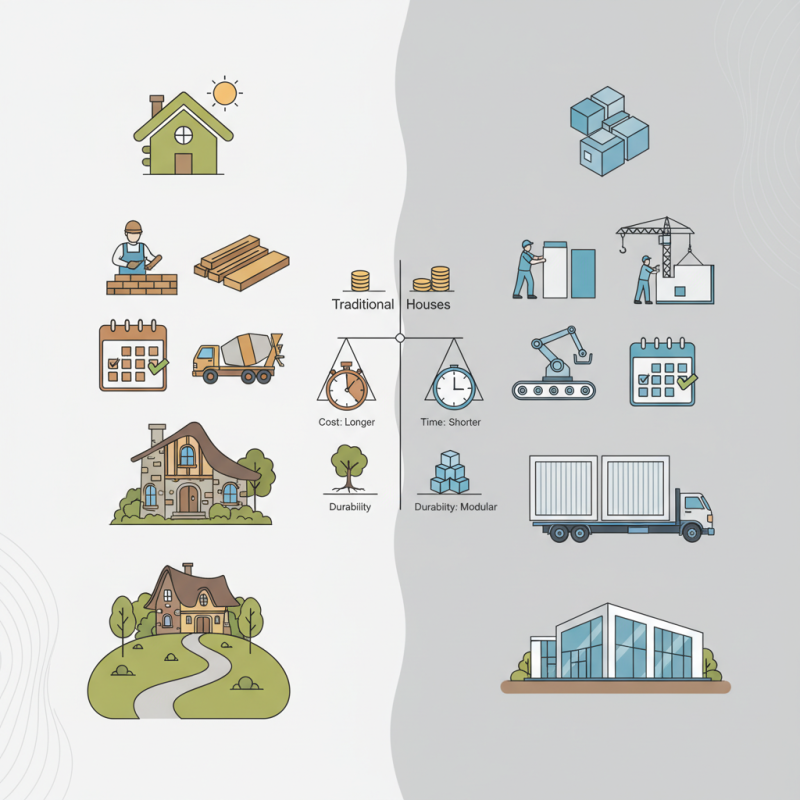
The question, "What is the difference between traditional and prefabricated houses?" sparks a significant discussion in the housing industry. According to Sarah Johnson, a leading architect, “Understanding the distinctions can help buyers make informed decisions.” Traditional houses, built on-site, typically use local materials and take longer to complete. They often have a unique aesthetic and better integration with their environment.
In contrast, prefabricated houses are manufactured in sections or modules. These are then transported to the site, reducing construction time and waste. They offer a modern look and often come with design flexibility. Each type has its pros and cons.
Homebuyers need to consider factors like cost, time, and durability. While prefabricated homes can be cost-effective, traditional homes might provide long-term value. A careful analysis of each type is crucial for making the best choice.
Definition of Traditional Houses and Their Construction Methods
Traditional houses are built using time-honored techniques. These methods often involve on-site construction. Workers manually craft each component, from the foundation to the roof. The materials are usually local, including brick, timber, or stone. This approach celebrates craftsmanship and individuality. Each house tells a unique story through its details.
Construction can be slow and labor-intensive. Weather or supply chain issues may cause delays. Builders face challenges in maintaining quality while meeting deadlines. Yet, many cherish the traditional method for its authenticity. There’s a strong connection to the community and the environment. People appreciate the character it brings.
In contrast to traditional houses, prefabricated homes utilize modern manufacturing. These homes are constructed in factories and then assembled on-site. This method offers speed and efficiency. However, there are concerns about customization and aesthetics. Prefabricated homes might lack the distinct charm of traditional houses. Each approach has its strengths and weaknesses, depending on personal preferences.
Comparison of Traditional and Prefabricated Houses
This chart compares the average construction time in months, cost per square foot, and energy efficiency ratings between traditional houses and prefabricated houses.
Definition of Prefabricated Houses and Their Construction Process
Prefabricated houses, often referred to as prefab homes, are built off-site in controlled environments. This method allows for higher quality control and faster construction times. The components are manufactured in a factory, then transported to the building site for assembly. Materials used are typically sustainable and can lead to less waste compared to traditional methods.
The construction process for prefabricated houses involves several stages. First, the design phase includes creating blueprints tailored to client specifications. Following this, manufacturing begins with raw materials like wood, steel, or concrete. Once the components are ready, workers assemble them on-site, often completing a house in mere weeks. However, this expedited process can sometimes overlook local zoning laws and climate considerations. Misalignment can lead to issues like energy inefficiency.
This innovative building method does offer benefits, but it can also have hidden drawbacks. Site preparation is crucial and may require more effort than anticipated. Additionally, clients might face limitations in custom design options. Understanding these nuances is vital for potential homeowners when deciding between traditional and prefab houses.
Key Advantages of Traditional Houses Compared to Prefabricated Ones
Traditional houses have long been cherished for their unique charm and craftsmanship. The tactile experience of walking through a home built with quality materials is unparalleled. When you step into a traditional house, the warmth of wood and the solidity of bricks provide a sense of security. There’s often a story behind each room, reflecting the local culture and history.
In contrast, while prefabricated houses offer speed and efficiency, they may lack the personal touch. Many people feel that prefabs can look too similar, lacking character. The flexibility in design for traditional homes allows homeowners to choose details that reflect their style. This attention to detail can create a deeper emotional connection. The community aspect of traditional homes is also significant. Neighbors look out for one another, fostering relationships that are often absent in many prefabricated developments.
However, traditional homes can present challenges. Costs can escalate quickly during construction. Additionally, the labor-intensive building process may lead to delays. Families often have different expectations when it comes to timelines and budget. It's essential to weigh these factors carefully, recognizing that while traditional homes provide a timeless appeal, they also require thoughtful planning and commitment.
Environmental Impact and Sustainability of Both Housing Types
The environmental impact of traditional and prefabricated houses varies significantly. Traditional houses often utilize locally sourced materials. However, they may produce more waste during construction. A report from the World Green Building Council states that up to 40% of the world’s raw materials are used in building construction. This statistic highlights the unsustainable nature of conventional methods.
In contrast, prefabricated houses are designed for efficiency. They generate less construction waste, as components are created in a controlled factory environment. According to a study by the McKinsey Global Institute, prefabrication can reduce material waste by 20% to 25%. Additionally, these homes often use advanced eco-friendly materials, which significantly lower their carbon footprint.
However, it's not all positive. Prefabricated homes may face challenges in terms of site adaptability. Some locations may not support their installation due to zoning laws. There remains a perception issue as well; many view them as inferior. Ultimately, while both methods have their pros and cons, the balance may skew toward prefabrication for future sustainability goals.
What is the difference between traditional and prefabricated houses? - Environmental Impact and Sustainability of Both Housing Types
| Aspect |
Traditional Houses |
Prefabricated Houses |
| Construction Time |
6-12 months |
2-6 months |
| Waste Generation |
High |
Low |
| Energy Efficiency |
Varies, typically lower |
Higher due to modern designs |
| Materials Used |
Local materials, often traditional |
Engineered materials, often recycled |
| Flexibility in Design |
Less flexible, more custom work needed |
Easily customizable |
| Impact on Environment |
Higher carbon footprint |
Lower carbon footprint |
| Cost |
High due to labor and materials |
Generally lower |
Cost Analysis: Traditional Houses vs. Prefabricated Houses
The cost dynamics between traditional and prefabricated houses present important contrasts for potential homeowners. Traditional home construction, often requiring months to complete, can be financially burdensome. On average, building a traditional house ranges from $150 to $400 per square foot, encompassing labor, materials, and unforeseen delays. A 2022 National Association of Home Builders report indicates that around 30% of a builder's costs come from labor. This variability can inflate overall expenses.
In contrast, prefabricated houses are gaining traction for their cost-effectiveness. Typically priced between $100 and $200 per square foot, they involve significant savings in labor and time. A McKinsey & Company report highlights that prefabrication can reduce construction timelines by 30-50%. However, some buyers may feel uneasy about the quality and durability of prefabricated options. Key concerns include potential underestimation of land preparation costs. Additionally, while components are manufactured in controlled environments, their assembly on-site can expose them to weather-related risks.
Investing in a prefabricated home can democratize housing opportunities, but buyers must weigh the trade-offs carefully. Local regulations, site specifics, and future resale values should factor into decision-making. Quality inspections and thorough assessments are crucial. These considerations ensure that the choice aligns with both budget and long-term goals.
FAQS
: Traditional houses are constructed using time-honored techniques and local materials such as brick or timber.
Construction is often manual, with workers crafting each component on-site, leading to unique houses.
Construction can be slow and labor-intensive, facing delays from weather or supply chain issues.
Prefabricated houses use modern manufacturing and are assembled on-site, offering speed and efficiency.
Traditional houses often produce more waste and utilize larger amounts of raw materials during construction.
Prefabricated homes reduce construction waste and often use eco-friendly materials, lowering their carbon footprint.
Traditional houses cost $150 to $400 per square foot, while prefabricated options range from $100 to $200 per square foot.
Buyers worry about the quality, durability, and potential land preparation costs of prefabricated homes.
Some locations may not be adaptable for prefabricated homes due to zoning laws and regulations.
Buyers must weigh local regulations, site specifics, and future resale values against their budget and goals.
Conclusion
The article "What is the difference between traditional and prefabricated houses?" explores the distinctions between these two housing types. Traditional houses are typically built on-site using conventional construction methods, which emphasizes craftsmanship and local materials. In contrast, prefabricated houses are constructed in factories and delivered to the building site in sections, allowing for quicker assembly.
The discussion highlights key advantages of traditional houses, such as their architectural flexibility and potential for customization. Furthermore, it evaluates the environmental impact and sustainability of both types, pointing out that while traditional homes can reflect local building practices, prefabricated houses often minimize waste and energy usage during construction. Finally, a cost analysis reveals that while prefabricated homes can offer lower upfront costs, traditional homes may provide long-term value through durability and aesthetic appeal.
 Ruifa Modular House