 Ruifa Modular House
Ruifa Modular House
Ruifa Modular House
In the ever-evolving field of architecture, understanding how to design prefabricated houses for different climates is increasingly vital. Recent data from the Global Prefabrication Market Report indicates that the prefab housing industry is projected to grow by 7.5% annually until 2027. This growth reflects a rising demand for sustainable and efficient housing solutions tailored to specific environmental conditions.
Expert Linda McCarthy notes, "Designing for climate specificity not only enhances adaptability but also significantly boosts energy efficiency." This approach ensures that prefabricated houses can withstand varied weather patterns while maintaining comfort and functionality. For example, homes in arid climates require materials that resist heat, while those in cold environments benefit from superior insulation.
Challenges persist in balancing design aesthetics with practical climate responses. Architects must weigh the cost of high-performance materials against long-term benefits. Creating a truly adaptable prefab home demands innovative thinking and ongoing research. Addressing this complexity is essential for the future of sustainable living in diverse climatic regions.
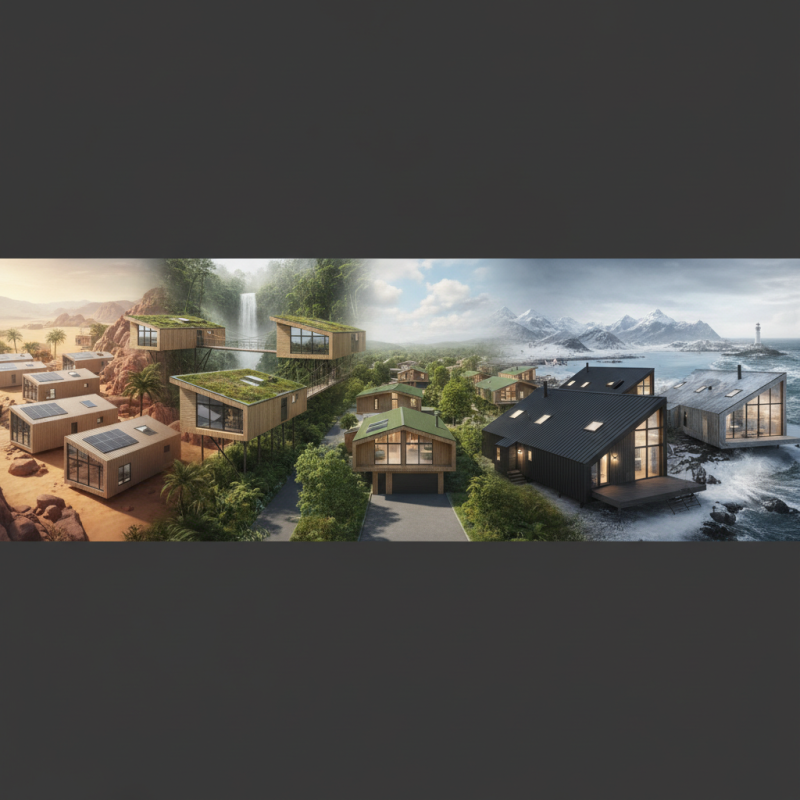
Understanding climate zones is crucial when designing prefabricated houses. Each zone presents unique challenges and opportunities that affect material choice and structural design. For example, houses in colder regions need strong insulation and double-glazed windows. These features maintain warmth and enhance energy efficiency. In contrast, homes located in hot and humid climates benefit from ventilated roofs and moisture-resistant materials.
Designing for diverse weather conditions isn’t straightforward. A prefab home might work well in one region but falter in another. For instance, heavy snowfall requires additional structural support. This design might not suit arid areas, where less weight is preferable. Additionally, local climate variations can dictate different strategies. Homes near the coast face salt air corrosion, requiring special treatments for longevity.
While anticipating climate-related issues, it’s worth acknowledging that solutions can fall short. Some pre-engineered designs may lack the flexibility needed for specific conditions. Educating homeowners about these nuances is essential. Effective prefabrication must consider not only general climate data but also localized weather patterns. This attention to detail can prevent future challenges and ensure sustainable living solutions.
| Climate Zone | Key Features | Design Recommendations | Materials to Consider |
|---|---|---|---|
| Tropical | High humidity, abundant rainfall, and warm temperatures. | Ventilated structures, raised foundations, and wider eaves. | Corrosion-resistant materials, treated wood, and breathable fabrics. |
| Desert | Extreme temperatures, low humidity, and high sun exposure. | Thermal mass, shaded areas, and reflective surfaces. | Insulated panels, stucco, and light-colored roofing. |
| Temperate | Mild summers and winters, moderate rainfall. | Good insulation, adaptable designs, and energy efficiency. | Wood framing, brick, and composite panels. |
| Continental | Cold winters and hot summers, variable precipitation. | Heavy insulation, snow load considerations, and storm-resistant designs. | High R-value insulation, brick, and steel framing. |
| Polar | Extremely cold temperatures, permafrost, and low precipitation. | Elevated designs, super insulation, and wind-resistant structures. | Structural insulated panels, reinforced concrete, and advanced glazing. |
: Materials need to be moisture-resistant to avoid mold and structural damage.
Proper airflow prevents moisture buildup and improves indoor air quality.
Larger overhangs protect walls and windows from direct rain exposure.
Waterproof coatings should be used to shield walls from moisture.
Roofs should allow for quick drainage to prevent water accumulation.
Use recycled materials and implement natural ventilation strategies when possible.
Different climates require specific materials to optimize energy efficiency.
It helps designers create adaptable homes that improve functionality over time.
Not all materials perform well in every climate, requiring ongoing research.
Understanding sun angles and weather patterns is crucial for effective designs.
When considering "How to design prefabricated houses for different climates," it is essential to understand the various climate zones and their specific impacts on housing design. Each climate presents unique challenges that must be addressed to ensure comfort and sustainability. In hot climates, for instance, maximizing ventilation and choosing reflective materials can significantly improve energy efficiency. Conversely, in cold environments, effective insulation strategies are critical to maintain warmth.
For humid and rainy regions, it's important to focus on moisture-resistant materials and proper drainage systems to prevent damage. Additionally, incorporating sustainable practices across all these designs not only enhances environmental responsibility but also improves the overall functionality of prefabricated homes. By tailoring designs to the distinct characteristics of each climate, architects and builders can create resilient and efficient living spaces that meet the needs of their inhabitants.
