Ruifa Modular House
When considering a new home, many people encounter the choice of how to choose between single and double storey prefabricated houses. Each option has unique benefits and potential drawbacks. Prefabricated homes offer efficiency and cost-effectiveness, making them attractive to buyers. However, deciding between a single or double storey layout can be challenging.
Single storey homes provide ease of access and an open feel, while double storey homes maximize space. Families with children or those seeking future expansion might lean towards the latter. On the other hand, single storey houses can be better for seniors or individuals with mobility issues. Reflecting on your needs and lifestyle is crucial in this decision-making process.
Understanding how to choose between single and double storey prefabricated houses requires careful evaluation. Prioritize factors like budget, future needs, and site restrictions. Consider the potential trade-offs. This choice may seem straightforward, but it often leads to deeper questions about space, functionality, and design.
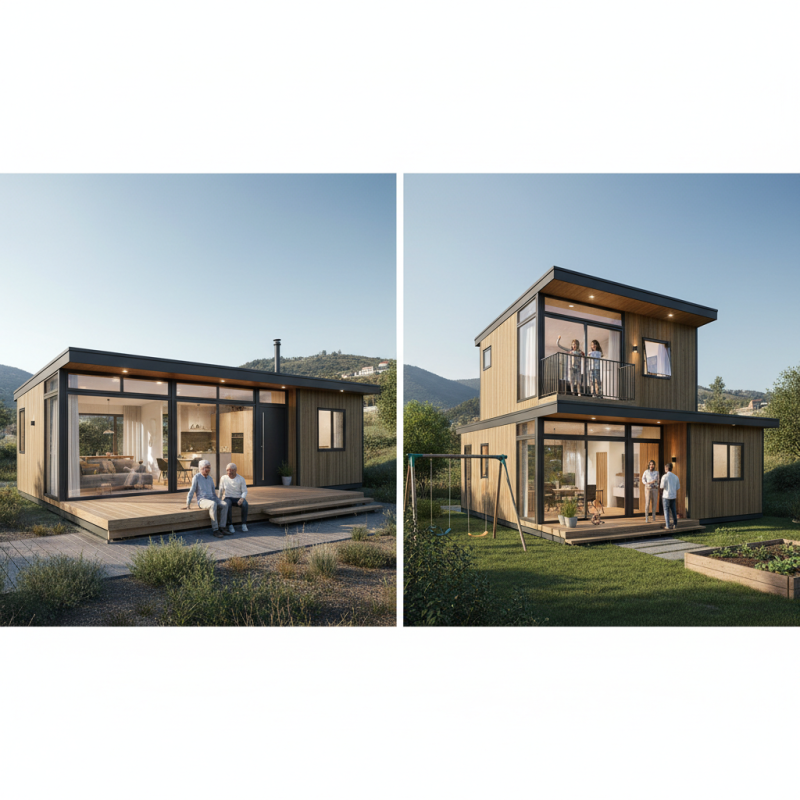
When considering prefab homes, the choice between single and double storey can significantly impact your living experience. One essential factor is the available land area. A single storey might suit smaller lots, while a double storey utilizes vertical space, allowing for a larger footprint. Evaluate your landscape carefully. Are views or privacy priorities? A double storey can offer captivating vistas and separation from neighbors.
Another important aspect is accessibility. Single storey homes are often more accessible for people with mobility issues. If you have family members who might benefit from ease of movement, consider this essential detail. Double storey designs might require stairs, which can be a challenge for some.
Tips: Think about future needs. A growing family may benefit from the extra space that a double storey home provides. Also, consider your lifestyle and how you use space. Do you often host guests? A two-storey design could offer more room for entertaining. Reflect on your choices. The right decision should align with your long-term vision for your living environment.
Single storey prefab homes cater to various lifestyles with unique advantages. These homes offer easy accessibility, making them ideal for families with young children or elderly residents. Living on one level minimizes the risk of falls, promoting safety and comfort. A single storey also encourages a cozy atmosphere, allowing for closer family interactions.
For those who enjoy entertaining, a single storey can enhance social gatherings. The open floor plan often found in these homes supports fluid movement between spaces. This design means guests easily mingle without feeling confined. Furthermore, accessibility extends outside; patios and gardens can be approached without stairs, inviting outdoor activities for everyone.
Tips: Consider your future lifestyle needs. Will you have children or aging parents? A single storey can provide flexibility. Take time to visualize your daily routines and how a single level satisfies them. Remember, your choice should reflect your priorities and lifestyle today and in the future.
When considering prefab homes, double storey options stand out for their unique space and design flexibility. These homes effectively maximize vertical space, making them ideal for smaller lots. Families can benefit from separate living areas, enhancing privacy. Imagine a cozy living room on the lower floor and bedrooms above. This separation promotes a sense of organization, especially for larger families.
Double storey designs allow for more creative layouts. Homeowners can customize spaces like home offices, guest suites, or playrooms. Visualize a vibrant workspace on the second floor, completed with natural light from large windows. However, it’s essential to reflect on practical aspects, like access to stairs for young children or elderly residents. Safety should always be a priority.
Furthermore, the aesthetic appeal of a double storey home is undeniable. A striking façade can enhance curb appeal while providing ample indoor space. While the idea of a spacious double storey could seem perfect, careful planning is necessary. Consider factors like heating and cooling demands or the cost of construction. Balancing design dreams with practical needs might require adjustments, but the rewards can be substantial.
| Aspect | Single Storey Prefab Homes | Double Storey Prefab Homes |
|---|---|---|
| Space Utilization | Limited ground space usage; wider land area required. | Maximizes land use; more living area in a smaller footprint. |
| Design Flexibility | Simple layout; fewer design variations. | Variety of layouts; custom options for different needs. |
| Construction Time | Relatively quicker due to simpler structure. | May take longer due to more complex designs. |
| Cost | Generally more affordable; lower material cost. | Higher construction costs; more materials and labor required. |
| Accessibility | Easier access for all ages; no stairs involved. | Stairs may pose a challenge; could require future adaptations. |
| Aesthetic Appeal | Classic look; often perceived as traditional. | Modern appearance; offers a variety of visual styles. |
When choosing between single and double-storey prefab homes, cost plays a critical role. Generally, single-storey homes require less material and labor, leading to lower upfront costs. You may save on foundations too, as these homes often have simpler structural needs. However, land costs can inflate this option. In urban areas, larger lots are usually pricier.
Double-storey prefab homes may seem expensive initially. They utilize vertical space, which allows for larger living areas without needing a bigger lot. The construction might take longer, impacting labor costs. Yet, these homes can offer greater long-term value. They often accommodate families better. You'll likely save on heating and cooling, as a smaller footprint equals efficiency.
Cost isn't the only consideration. Single-storey homes are simpler to navigate and maintain, especially for elderly residents. On the other hand, double-storey options might feel more spacious. However, families may need to reflect on their routine and preferences. Are stairs a hassle or a journey? Every choice comes with trade-offs, and it’s essential to weigh them based on your lifestyle and budget.
When choosing between single and double storey prefab homes, location and site conditions play a critical role. The terrain can greatly influence the design decision. For example, a sloped site may favor a single storey home to minimize excavation costs. On the other hand, flat land is more versatile, often allowing for double storey options that maximize living space without increasing the footprint.
Environmental factors also add complexity. In urban areas, zoning laws often dictate the type and height of structures. According to a report by the National Association of Home Builders, 32% of buyers in city locations prefer multi-storey designs. Such homes can offer better views and reduce land use. However, in rural regions, a single storey may be more appealing for its ease of access and integration with the landscape.
Each site presents unique challenges. Soil quality and climate can impact your choice. For instance, a sandy soil condition might undermine a taller structure. A study from the American Society of Civil Engineers notes that structural integrity is paramount, with 15% of construction failures linked to poor site assessments. Potential homeowners should carefully evaluate these factors to make an informed choice.
: They maximize vertical space and enhance privacy for families. Separate living areas improve organization for larger households.
Homeowners can create various spaces, like offices or playrooms. This flexibility encourages creativity in layout design.
Access to stairs is crucial for young children and the elderly. Safety should always be a priority in home design.
Single-storey homes typically have lower upfront costs, but land prices can be higher in urban areas.
They may accommodate families better and save on heating or cooling costs due to their smaller footprint.
Sloped terrains may favor single-storey homes, while flat land allows for versatile double-storey options.
Zoning laws and soil quality can influence whether to choose single or double storey designs.
Single-storey homes are easier to maintain, while double-storey options may feel more spacious. Both have their challenges.
Poor site assessments can lead to structural failures. Soil quality and climate are important factors to evaluate.
Balancing design vision with practical needs like heating efficiency is essential. Adjustments may be needed to achieve the best outcome.
When considering how to choose between single and double storey prefabricated houses, several key factors come into play. Single storey homes are often advantageous for various lifestyles, offering easy accessibility and convenience, making them ideal for families with young children or elderly members. On the other hand, double storey homes provide enhanced space and design flexibility, catering to larger families or those who desire more room for customization.
Furthermore, a cost comparison reveals that single storey homes may be more budget-friendly, while double storey options can maximize living space in areas with limited land. Additionally, the choice between these two designs can be significantly influenced by the location and specific site conditions, which play a crucial role in the overall feasibility and comfort of the home. By weighing these factors, one can make an informed decision that aligns with their lifestyle and preferences.
